

- NON-PROFIT & PUBLIC SECTOR
- ELECTION INTELLIGENCE
How we designed and delivered the geospatial infrastructure for democracy in Lebanon

In the months before Lebanon’s 2009 parliamentary elections, an electoral reform coalition needed tools to track results, engage supporters, and monitor election day in real time. The problem: no geospatial data or infrastructure existed.
Integral spent six months on the ground in Beirut building the data foundation from scratch and delivering a suite of applications that helped support a democracy in presenting election results to its citizens in real time

6
months on the ground in Beirut building the data foundation
#1
Lebanon’s first geospatial electoral infrastructure built from scratch
-
Define the decision
Lebanon’s 2009 parliamentary elections posed a set of decisions that no existing tools could answer. How do you get supporters to the polls? Where is the nearest polling place? How do you monitor results in real time across an entire country?
None of those questions could be answered with data that didn’t exist. Before any application could be built, Lebanon needed its first geospatial map of political districts and a structured record of voter preferences. The decision to solve wasn’t just operational. It was foundational.

-
Design the system
With no existing geospatial infrastructure to build on, the design process started on the ground. Integral’s team worked in Beirut for six months, gathering local information, mapping political districts, and digitizing voter preference data from handwritten logs.
The system was designed to serve multiple users across the electoral process, from political parties identifying and mobilizing supporters to election monitors tracking results in real time to networks reporting results to the public.
-
Build the platform
On top of Lebanon’s first geospatial political district dataset, Integral built a suite of applications covering the full electoral lifecycle.
Core capabilities included:
- a Political Party Map giving parties visibility into voter concentration, distribution, demographic representation, and polling center locations
- A supporter mobilization tool helped parties identify clusters of potential support and plan the most efficient routes to get them to polling stations
- Election day monitoring was enabled over SMS, giving real-time visibility into results as they came in
- Post-election, predictive analysis based on exit polls was delivered to Beirut’s major networks for live broadcast reporting
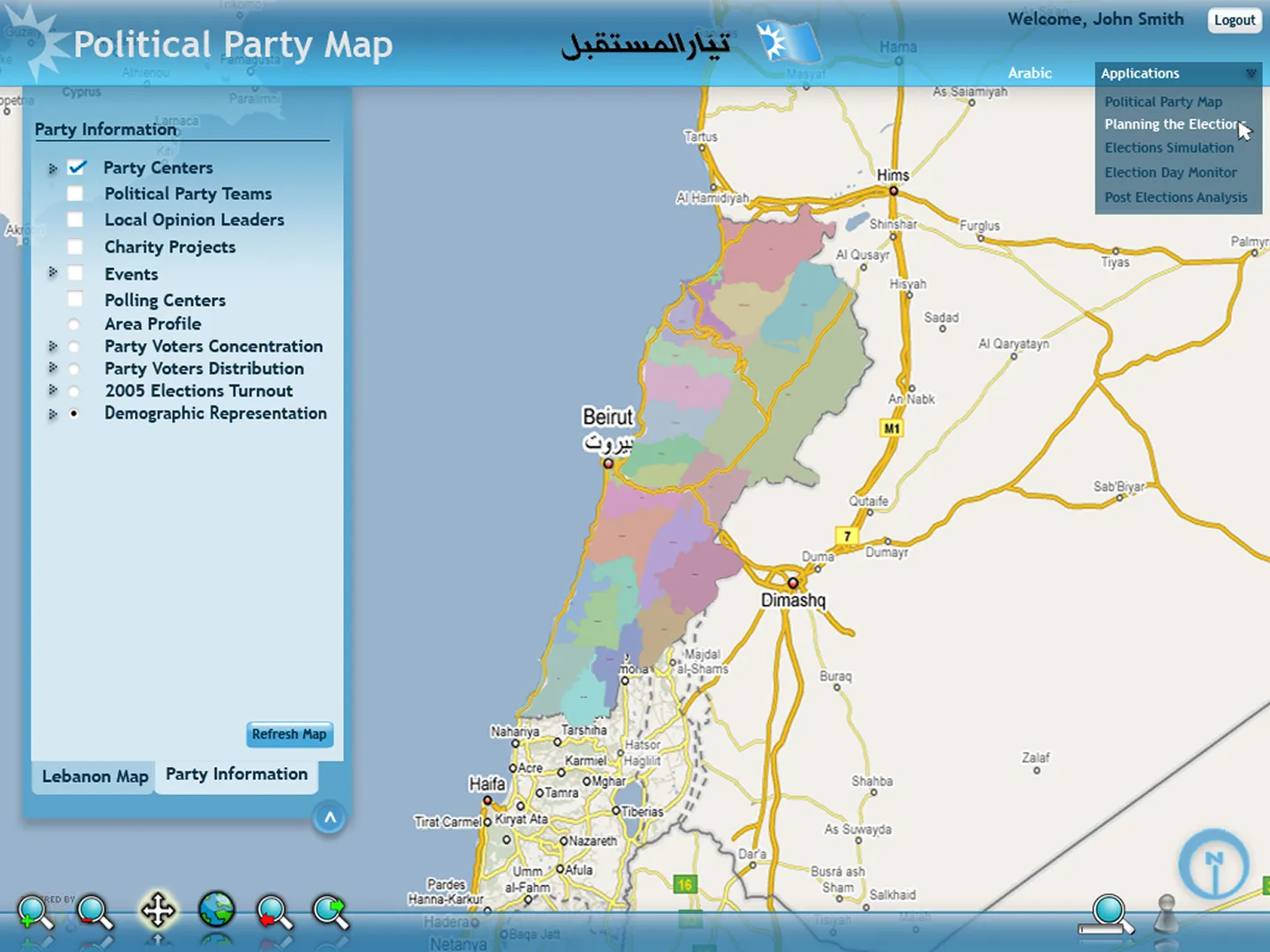
Lebanon’s first geospatial political district map, built from scratch, giving parties and election monitors a shared spatial foundation for planning, simulation, and real-time election day monitoring. -
Deliver the insight
For the first time, Lebanon’s political parties, election monitors, and news networks had a shared spatial foundation for understanding and reporting on a national election.
Parties could identify supporter clusters and coordinate transportation to polling stations. Monitors could track results in real time over SMS. Networks in Beirut had predictive exit poll analysis to report results to citizens as they happened.
Integral helped support a democracy in presenting its election results to its people in real time.
Integral helped support a democracy in presenting its election results to its people in real time.
-
Support real-world use
The Lebanon engagement was defined by the six months Integral spent on the ground building something from nothing. The data fabric, district maps, and applications created for the 2009 elections established the first geospatial foundation for Lebanese electoral infrastructure.
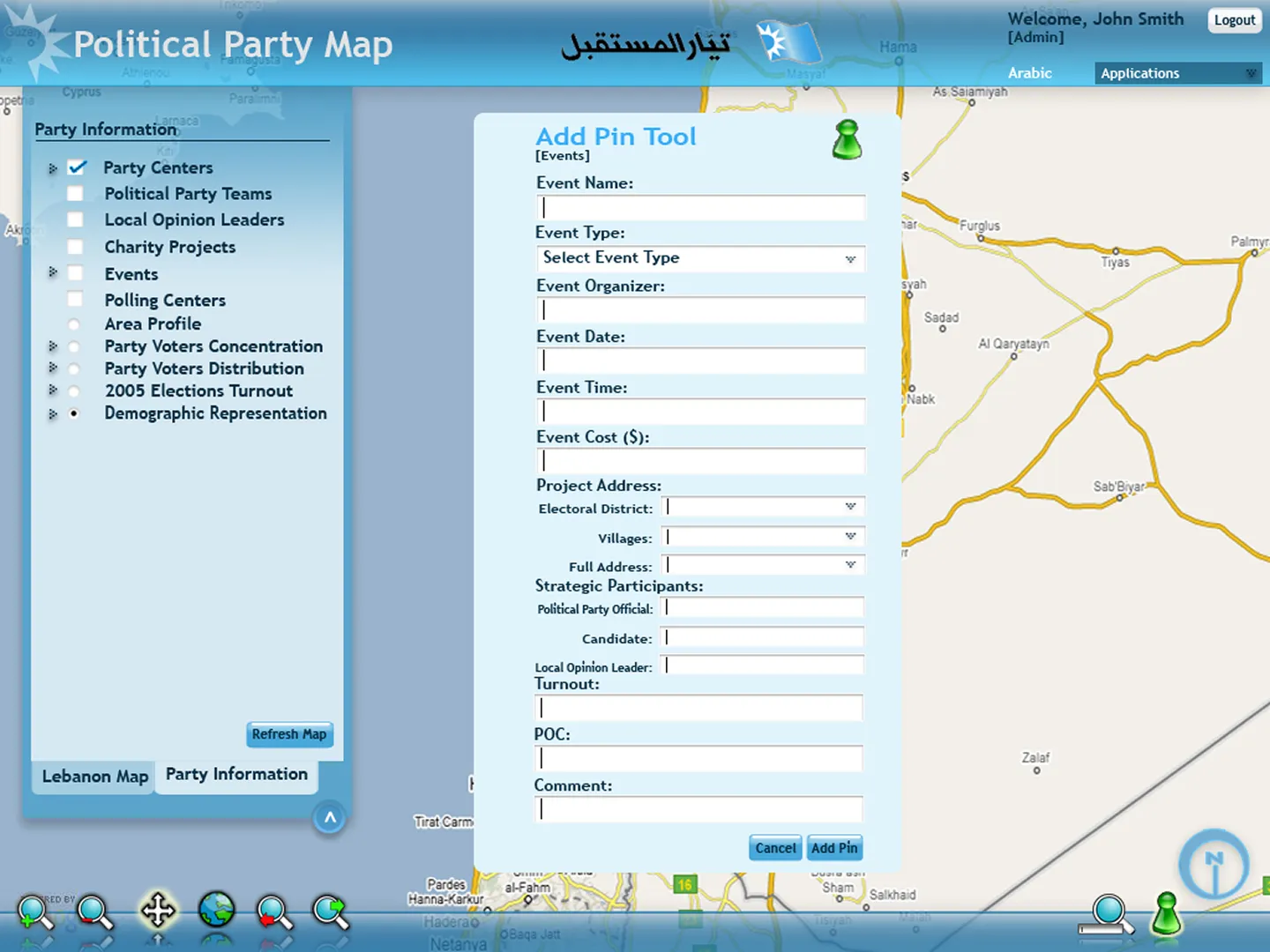
Lebanon’s first geospatial political district map, built from scratch, giving parties and election monitors a shared spatial foundation for planning, simulation, and real-time election day monitoring. Our work proved that with the right team, and wholehearted commitment, you can build the essential information infrastructure to support and sustain democracy—from the ground up.
Complex problems deserve purpose-built solutions.
Understanding your challenge is step one. Tell us what you're working on and discover how we can work together to figure out the right solution.